

First impressions in the supplement category often happen at the point of consumption. A consumer scoops a product, stirs or shakes it, and immediately forms an opinion based on what they see and experience. Powder supplements that mix cleanly and dissolve fully signal quality before a single ingredient takes effect. Those that clump, foam excessively, or leave residue at the bottom of a glass send a different message entirely.
Why Mixability Is a Formulation Variable, Not an Afterthought
Mixability is often treated as a finishing detail in product development. In reality, it is a technical property that is shaped by ingredient selection, particle characteristics, and processing decisions made early in formulation. By the time a product reaches the consumer, its mixability profile is largely locked in.
The primary factors that influence how well a powder supplement disperses in liquid include particle size, bulk density, surface chemistry, and the presence or absence of agents that support wetting and dispersion. Each of these variables interacts with the others, and adjusting one can affect the rest. A formulator who understands these relationships can engineer mixability intentionally rather than hope for it incidentally.
Particle Size and Its Role in Dispersion
Particle size is one of the most direct determinants of how a powder behaves in liquid. Finer particles generally offer greater surface area, which can support faster dissolution. However, very fine particles also tend to clump together through a process called agglomeration, creating dense masses that resist wetting and take longer to break apart.

Coarser particles may resist agglomeration but dissolve more slowly and can leave a gritty texture in the finished drink. The optimal particle size for any given formula depends on the specific ingredients involved and the liquid environment they will be mixed into. Finding that balance requires controlled milling and particle size analysis, not guesswork.
Ingredient blends add another layer of complexity. Most powder supplements contain multiple components with different particle sizes and densities. If those components are not matched or processed to behave compatibly, the result can be uneven dispersion, where some ingredients dissolve quickly while others settle or float.
Wettability and the Challenge of Hydrophobic Ingredients
Before a powder can dissolve, it has to get wet. Wettability refers to how readily a powder surface interacts with water, and it varies significantly across ingredients. Hydrophilic ingredients, those that naturally attract water, tend to wet quickly and disperse well. Hydrophobic ingredients repel water and resist it, creating islands of undissolved material that no amount of shaking will fully resolve.
Many common supplement ingredients fall on the hydrophobic end of the spectrum. Certain amino acids, lipid-based compounds, and some botanical extracts are notoriously difficult to wet. Addressing this requires the use of dispersing agents or surface treatments that modify the powder's interaction with water without compromising the ingredient's integrity or the product's clean label positioning.
Spray drying and instantization are two processing techniques used to improve wettability in powder supplements. Both involve modifying the physical structure of particles to increase surface area and reduce hydrophobicity. They require specialized equipment and careful process control, but the payoff is a powder that behaves consistently across the range of conditions a consumer might use it in.
Excipients in Powder Supplements Mixability
Excipients are inactive ingredients added to a formula for functional purposes, and in powder supplements, several categories exist specifically to support mixability. Flow agents reduce friction between particles during blending and handling. Anti-caking agents prevent moisture-driven clumping during storage. Emulsifiers help bring hydrophobic and hydrophilic components into stable suspension.
The selection of these excipients matters both technically and commercially. Some conventional choices are increasingly scrutinized by consumers pursuing clean label products. A formulator navigating that tension needs to know which functional alternatives are available and how they perform across the temperature, humidity, and shaking variables a real consumer will introduce.
Getting excipient selection right also requires understanding how those ingredients interact with the actives in the formula. Some combinations produce unexpected textural outcomes or affect flavor, which means mixability decisions cannot be made in isolation from the broader formulation.
Consistency Across Batches and Conditions
A powder supplement that mixes well in a controlled lab setting must also mix well in a gym bag at room temperature after being left in the car on a warm afternoon. Real-world use conditions are rarely ideal, and a product's mixability profile should be validated across a range of them, not just the best-case scenario.
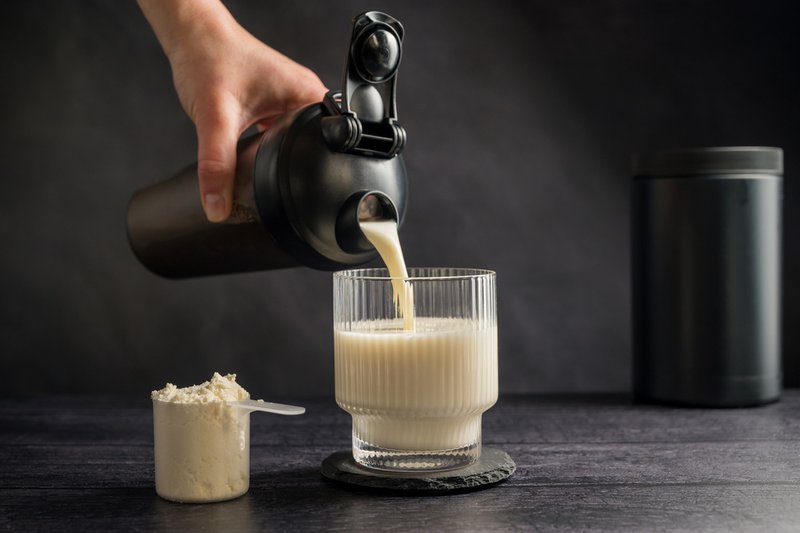
Batch-to-batch consistency is equally important. If mixability varies depending on which production run a consumer happens to purchase, the resulting experience is unpredictable. That unpredictability erodes trust even when the underlying formula is sound. Tight process controls, consistent raw material sourcing, and robust in-process testing are what make mixability a reliable product attribute rather than a variable one.
What Mixability in Powder Supplements Signals to the Consumer
Consumers rarely think about particle size or surface chemistry when they shake their pre-workout. What they notice is whether the product mixes easily, looks appealing in the glass, and feels smooth to drink. Those sensory outcomes are the downstream result of formulation decisions made long before the product reached them.
Brands that invest in mixability as a genuine technical priority build products that deliver a consistent, satisfying experience every time. That experience is what drives repurchase, and in a category as competitive as powder supplements, repurchase is the metric that sustains a brand.
At Bactolac Pharmaceutical, our powder manufacturing capabilities are built around the technical precision that mixability requires. From particle size management to excipient selection and in-house testing, we work with brands to develop powder supplements that perform at the point of consumption. Our R&D team supports formulation development from concept through finished product, ensuring that the science behind the formula shows up in the experience it delivers.
It’s time to start a conversation about your powder supplement development needs. Call us at 1-833-215-2935 or fill out a contact form to connect with our team today.