

Most brands evaluate a manufacturing partner by what they can see: equipment, facility size, and the certifications on the wall. What they see during a tour represents only a fraction of what determines production outcomes. Supplement manufacturing is surrounded by operational systems, documentation disciplines, personnel functions, and environmental controls that never appear on a capability sheet but shape every batch that leaves a facility. The brands that understand what happens around the equipment make better manufacturing decisions than those focused exclusively on what happens inside it.
1) Documentation Management in Supplement Manufacturing
Every production run generates significant documentation. Batch records, raw material certificates of analysis, in-process testing logs, equipment calibration records, deviation reports, and quality release authorizations all require accurate completion, thorough review, and retrievable storage.
That workload does not happen automatically. It requires trained personnel, defined workflows, and systems that can manage records across multiple simultaneous production cycles. Facilities that manage documentation well produce clean batch records, fast quality release, and a defensible audit trail. Those that manage it poorly generate release delays, incomplete records requiring remediation, and regulatory exposure a brand inherits by association.
Documentation failures are among the most common FDA inspection findings in supplement manufacturing. Importantly, they rarely reflect problems with the physical production process. They reflect gaps in the operational infrastructure surrounding it.
2) Personnel Training and Retention
The equipment in a supplement manufacturing facility performs exactly as well as the people operating it. Blending parameters, fill weight targets, in-process sampling protocols, and environmental monitoring procedures all depend on trained personnel executing them correctly across every production shift.
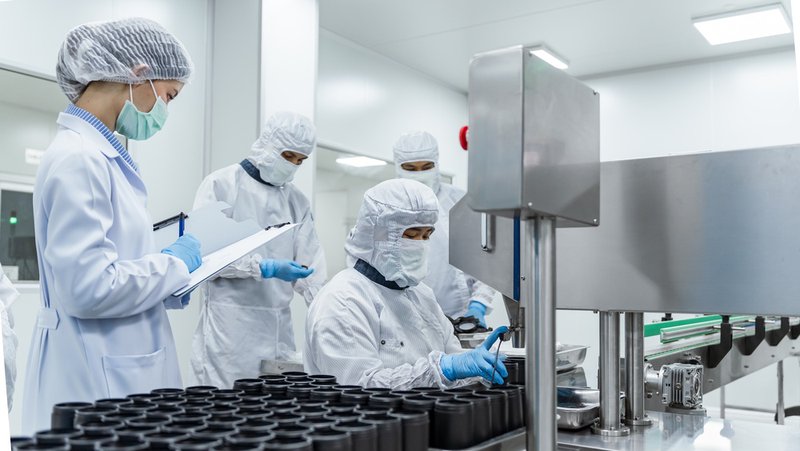
High staff turnover creates a persistent training gap that affects production consistency in ways quality testing alone cannot fully detect. Experienced operators understand not just the procedure but the reason behind it. They catch deviations that newer personnel miss and make better real-time judgments when a process behaves unexpectedly.
A facility that invests in developing its personnel builds an operational asset that compounds over time. One that treats training as a one-time onboarding event and accepts high turnover as normal is managing a quality risk that brands rarely account for during vendor evaluation.
3) Changeover and Cleaning Protocols Between Runs
Between every production run, equipment must be cleaned and verified before the next batch begins. That changeover process is more consequential than it appears from the outside.
Cleaning validation is the documented confirmation that a cleaning process reliably removes residue from a previous product to a level that does not affect the next. In a facility producing products with common allergens or potent botanicals, cleaning validation is a product safety requirement, not a formality. Facilities that have not validated their cleaning processes are making assumptions their data does not support.
Changeover also consumes scheduled production time. A facility that underestimates changeover duration when building its production schedule creates timeline compression that pressures cleaning thoroughness. When schedule pressure and cleaning quality compete, the consequences eventually show up in the finished product.
4) Supplier Relationship Management Beyond the Purchase Order
Raw material quality begins with the suppliers providing it, and managing those relationships is an ongoing operational function. Qualifying a new supplier involves identity and purity testing, documentation review, and performance tracking. Maintaining a qualified supplier requires requalification and ongoing communication that surfaces quality trends before they become production problems.
A manufacturer that qualifies suppliers rigorously and maintains alternative sources for critical ingredients provides procurement resilience that protects production continuity. One that selects suppliers primarily on price and processes orders without ongoing performance evaluation transfers supplier quality risk directly to the brands it serves.
Supplier relationship depth also determines how quickly a facility responds to shortages or quality failures. That resilience is an operational asset brands rarely evaluate explicitly but feel immediately when supply chain disruptions occur.
5) Environmental Monitoring as an Active Production Function
Temperature, humidity, air quality, and microbial conditions in a supplement manufacturing facility are active production variables requiring continuous monitoring and documented review. Environmental monitoring programs at well-run facilities include scheduled surface and air sampling, continuous condition logging, and trend analysis that identifies gradual drift before it reaches a specification limit.

Trend data is more operationally valuable than single-point compliance checks. A facility monitoring reactively, checking conditions only when a problem is suspected, manages environmental risk without adequate visibility into how it develops. A single out-of-specification reading means something very different in a facility with trend data than in one without it.
6) Regulatory Change Management
FDA guidance for dietary supplement manufacturing evolves, and staying current requires a deliberate regulatory monitoring function. Enforcement priorities shift, new guidance documents are issued, and inspection expectations change over time. A facility that does not actively track those developments risks operating against outdated compliance assumptions.
Discovering a regulatory gap during an FDA inspection is significantly more expensive than identifying it through proactive internal review. For brands, their manufacturer's regulatory awareness functions as their own regulatory protection. A quality management team that monitors FDA guidance and updates internal procedures accordingly provides a compliance function that extends to every product it produces.
What Brands Should Look for Behind the Scenes
At Bactolac Pharmaceutical, the operational infrastructure surrounding our production equipment is as deliberately built as the equipment itself. Our supplement manufacturing operations include structured documentation management, validated cleaning and changeover protocols, active environmental monitoring, and a regulatory compliance function that tracks evolving FDA expectations.
Our in-house testing lab and full lab and testing capabilities support quality release functions that keep production moving without sacrificing accuracy. We produce powders, capsules, tablets, and softgels, supported by turnkey packaging services and shipping to any domestic distribution center, including Amazon fulfillment centers, as well as international shipping facilitation.
Learn about the operational standards behind every product we manufacture. Call us at 1-833-215-2935 or fill out a contact form to connect with our team.