

Growth creates new opportunities for supplement brands, but scaling operations often introduces additional production challenges. Supplement production becomes more complex as batch sizes increase, product lines expand, and customer expectations continue rising.
Many products perform well during small development runs but lose consistency at larger volumes. Flavor drift, texture changes, blending inconsistencies, and packaging variability may become more noticeable during scaling. Manufacturers that prepare for these transitions early often maintain stronger product quality throughout long-term growth.
Why Supplement Production Changes During Scaling
Scaling affects nearly every stage of manufacturing. Larger production runs require different material handling processes, extended blending times, and greater coordination between sourcing, testing, and packaging operations.
Ingredient behavior may also change at higher volumes. Powders that blend evenly in pilot batches may separate differently during large-scale production. Moisture exposure, particle distribution, and flowability can all shift as production expands.
Manufacturers with scaling experience usually anticipate these operational differences earlier. Better preparation helps reduce inconsistencies before products reach customers.
Flavor Consistency Matters During Supplement Production
Flavor performance strongly influences customer retention across powder supplements. Consumers expect the same taste experience with every reorder, regardless of production volume.
Scaling may create flavor inconsistencies when blending systems, ingredient dispersion, or moisture conditions change. Small variations in flavor systems can become more noticeable during larger production runs.
Manufacturers often use controlled blending procedures and batch testing to maintain consistency. Reliable flavor systems support stronger customer confidence while reducing complaints related to taste variation.

Supplement Production Requires Reliable Ingredient Sourcing
Ingredient quality directly affects production consistency at scale. Variability between raw material lots may create changes in taste, texture, color, or stability during manufacturing.
Manufacturers with broader supplier networks often maintain more reliable ingredient access during growth periods. Strong sourcing systems also help reduce disruptions caused by shortages or transportation delays.
Ingredient verification remains important during scaling as well. Testing procedures help confirm that incoming materials meet required quality standards before production begins.
Powder Flowability Affects Supplement Production Efficiency
Powder behavior influences manufacturing performance throughout blending, filling, and packaging operations. Poor flowability may create filling inconsistencies, production slowdowns, or uneven ingredient distribution.
Some ingredients become more difficult to manage at larger production volumes. Moisture-sensitive compounds, fine powders, and sticky ingredients may require additional process controls during scaling.
Manufacturers typically evaluate flowability during pilot testing and commercial production planning. Better powder performance supports smoother operations and more consistent finished products.
Supplement Production Depends on Controlled Manufacturing Conditions
Environmental controls become increasingly important during high-volume production. Temperature, humidity, and airflow conditions all influence ingredient stability and blending consistency.
Uncontrolled manufacturing environments may increase risks related to moisture absorption or powder clumping. These issues can affect both flavor performance and product appearance over time.
Manufacturers with controlled production environments often maintain stronger consistency across larger runs. Environmental monitoring supports more stable manufacturing conditions throughout scaling.
Packaging Systems Influence Product Quality
Packaging performance becomes more important as production volumes increase. Containers, stick packs, sachets, and pouches must protect products throughout shipping, storage, and consumer use.
Poor sealing systems or inconsistent packaging materials may reduce shelf stability and affect flavor quality later. Moisture exposure can also create texture changes or clumping in powder formulations.
Manufacturers should evaluate packaging systems alongside formulation performance during scaling. Coordinated packaging and production planning help maintain product consistency over time.
Supplement Production Requires Strong Testing Systems
Testing helps manufacturers monitor consistency throughout scaling. Blend uniformity, flavor stability, moisture levels, and microbial safety all require ongoing verification during production.
In-house testing capabilities often improve response times during larger manufacturing runs. Faster testing helps teams identify and correct small issues before they affect full production volumes.
Routine testing also supports batch-to-batch consistency. Reliable quality systems become increasingly valuable as product demand grows.
Equipment Capability Affects Supplement Production Outcomes
Production equipment must support both efficiency and consistency during scaling. Blenders, filling systems, packaging lines, and material handling equipment all influence final product quality.
Older or poorly maintained equipment may struggle during larger production runs. Fill weight inconsistencies, blending variability, and packaging delays can affect operational performance quickly.
Manufacturers with scalable equipment systems often maintain steadier output during growth periods. Preventive maintenance and calibration programs also support more reliable production performance.
Communication Helps Supplement Production Scale Smoothly
Operational communication becomes more important as manufacturing complexity increases. Ingredient suppliers, production teams, testing departments, and packaging operations must remain aligned throughout scaling.
Communication gaps may delay production schedules or create inconsistent execution between departments. Faster coordination often improves issue resolution during active production runs.
Manufacturers with integrated operations usually maintain stronger visibility throughout production. Better communication helps reduce disruptions while supporting more predictable timelines.
Supplement Production Benefits From Pilot Testing
Pilot production runs help manufacturers evaluate product behavior before full-scale manufacturing begins. These smaller runs identify potential challenges related to blending, flavor performance, flowability, and packaging compatibility.
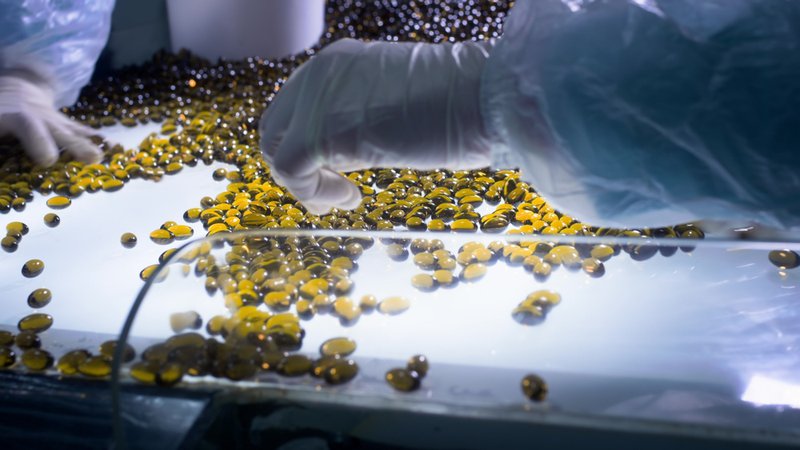
Testing products at intermediate production volumes often reduces future scaling risks. Manufacturers can refine processes before committing to larger commercial output.
Pilot testing also improves forecasting and scheduling accuracy. Better operational visibility supports smoother long-term expansion planning.
Long-Term Growth Requires Operational Consistency
Scaling successfully requires more than increased production capacity. Flavor consistency, ingredient quality, testing systems, and packaging reliability all influence customer experience during growth periods.
Supplement production becomes more demanding as brands expand into larger distribution channels and recurring purchase programs. Operational discipline helps protect product quality while supporting long-term scalability.
Manufacturers with integrated capabilities often provide stronger support during these transitions. Coordinated systems improve consistency across formulation, testing, packaging, and production management.
Consistent Supplement Production Supports Brand Growth
Customers expect reliable product performance regardless of manufacturing volume. Flavor variation, texture changes, and packaging inconsistencies can weaken trust quickly during periods of rapid growth.
At Bactolac Pharmaceuticals, we support brands through integrated supplement production, in-house testing, advanced flavor system development, and scalable packaging capabilities across powders, capsules, tablets, stick packs, sachets, bottles, and more. Our team focuses on helping brands scale manufacturing operations while maintaining consistent product quality and customer experience.
Fill out a form on our website or call 1-833-215-2935 to connect with our team.