

Growth is the objective most supplement brands are working toward. More distribution, more SKUs, higher order volumes, and new markets are the markers of a brand that is gaining traction. What is less discussed is the pressure that rapid growth places on product quality, and how frequently brands discover that pressure only after quality has already slipped.
How Growth Creates Product Quality Pressure
Quality pressure during rapid growth rarely announces itself clearly. It accumulates through a series of small compromises that individually seem manageable and collectively produce a product that is measurably different from the one that earned the brand its early reputation.
Higher-order volumes stress production scheduling in ways that smaller runs did not. A manufacturing facility managing a brand's first few production runs can absorb variability with relative flexibility. As volumes increase and production slots become more tightly scheduled, that flexibility shrinks. Personnel managing higher throughput have less margin to catch and address minor deviations before they affect finished goods.
New SKUs add complexity that compounds across every production function. Each additional product requires its own raw material procurement, its own production scheduling, its own quality documentation, and its own finished product testing. A quality system that handled three products with appropriate rigor may struggle to maintain that rigor across twelve without a proportional increase in capacity and personnel.
The Danger of Outgrowing a Manufacturing Partner
One of the most common quality failure patterns in growing supplement brands is the mismatch between a brand's volume requirements and its manufacturing partner's actual capacity. A manufacturer that was well-suited to a brand's early production needs may not have the equipment capacity, raw material procurement infrastructure, or quality system depth to support the brand at significantly higher volumes.

This mismatch tends to reveal itself gradually. Lead times lengthen. Batch-to-batch variation increases slightly but noticeably. Quality release slows. Communication becomes less proactive. Each of those signals individually might be attributed to a temporary disruption. Together, they indicate a manufacturing relationship that has reached its capacity limits.
Brands that recognize this pattern early have options. Those that recognize it after a quality failure has reached consumers face a harder recovery. Evaluating a manufacturing partner's scalability before committing to a growth phase, rather than after volume has already increased, is one of the most operationally valuable decisions a brand can make.
Documentation and Product Quality Systems Must Scale With Volume
A quality system that functions at low volume through the discipline and attention of a small team cannot sustain product quality at higher volumes without documented processes that operate independently of any individual's memory or judgment. Growth exposes the gap between quality systems built on institutional knowledge and those built on documented, reproducible procedures.
Brands should expect their manufacturing partner to operate with documented SOPs that cover every production and quality function, regardless of production volume. Those documents are what allow a facility to onboard additional personnel, handle higher throughput, and maintain consistency across more simultaneous production runs without quality degrading proportionally.
Batch record completeness is a parallel indicator of documentation quality. A batch record that captures every production step, every in-process check, and every quality result for a specific run is the traceable record of how that batch was made. As production volume grows and more runs are completed simultaneously, the discipline of complete batch record keeping is what maintains the traceability a brand needs to investigate quality events and defend its products to retail partners and regulators.
Raw Material Quality Cannot Be Compromised at Scale
The temptation to relax raw material standards under volume pressure is one of the more insidious quality risks that growing brands face. As order volumes increase, procurement costs become more visible and more scrutinized. Pressure to reduce ingredient costs can translate into pressure to accept lower-cost material that has not been qualified to the same standard as the original source.
Raw material substitutions made under cost pressure without adequate qualification testing introduce quality variables that may not surface immediately. A less pure form of an ingredient, a different particle size distribution, or a botanical from a different growing region can affect blending behavior, potency, and finished product performance in ways that only become apparent after the material has been used in commercial production.
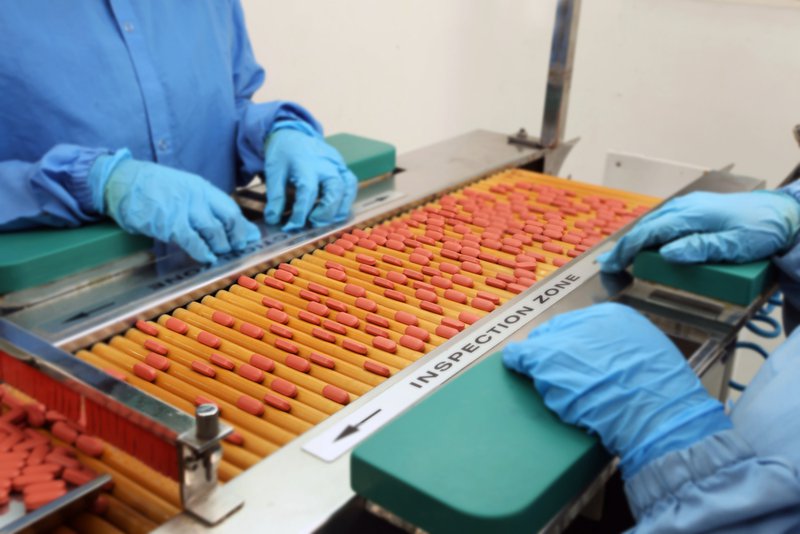
Maintaining incoming material testing standards at higher volumes, even when testing capacity is stretched, is non-negotiable for brands committed to protecting product quality through growth. A manufacturing partner that maintains consistent raw material testing regardless of procurement pressure is providing a quality anchor that cost-driven shortcuts would undermine.
Consumer Feedback as an Early Quality Signal
Consumer feedback is one of the most underutilized quality monitoring tools available to growing supplement brands. As distribution expands and more consumers interact with a product, the feedback generated through reviews, customer service interactions, and social commentary provides a real-world signal about product performance that internal quality testing does not always capture.
Changes in consumer feedback patterns, particularly around sensory attributes like flavor, texture, and mixability, frequently surface quality shifts before they are detectable through internal testing. Brands that monitor feedback systematically and connect it to production data have an early warning system that brands treating feedback as a customer service function alone do not.
Closing the loop between consumer feedback and manufacturing is a communication discipline that requires intentional effort. A brand's operations team needs a channel to share relevant feedback with its manufacturing partner, and that partner needs a process for evaluating whether production data supports or contradicts what consumers are reporting. Without that loop, quality shifts that consumers detect may go unaddressed at the source for multiple production cycles.
Planning Growth With Manufacturing Capacity in Mind
At Bactolac Pharmaceutical, our production infrastructure is built to support brands through growth phases without compromising the product quality standards that define our manufacturing operations. Our documented quality systems, in-house testing capabilities, and multi-format production across powders, capsules, and tablets are designed to scale with volume rather than strain under it.
Brands working with us have access to the same manufacturing rigor at higher volumes that they received on their first production run, supported by turnkey packaging services that maintain the same standard through to finished goods.
Call us at 1-833-215-2935 or fill out a contact form to connect with our team.