

The supplement industry is full of confident launch announcements followed by quiet disappointments. A supplement product that generates strong pre-launch interest but arrives late, performs inconsistently, or fails to match its marketing claims does more damage than a product that launched with modest expectations and met them. The gap between what a brand promises and what it delivers is rarely a formulation problem. It is an expectation management problem, and it begins long before a product reaches production.
Why Supplement Product Launches Go Wrong
Most launch failures share a recognizable pattern. A brand builds excitement around a product before operations are ready to match its commercial ambitions. Brands announce timelines before confirming production and make claims before finalizing the formula. Retail commitments are made before securing inventory. Each of those decisions individually feels like momentum. Together, they create a launch scenario in which the brand is managing a gap between what it has told stakeholders and what its production reality can deliver.
The pressure to announce early is real. Consumer interest, investor expectations, and competitive positioning all create incentives to move faster than operational readiness supports. But a launch that cannot be fulfilled on the terms it was announced damages relationships and credibility in ways that take significantly longer to repair than the delay it was trying to avoid would have cost.
Setting Supplement Product Expectations That Operations Can Support
The most effective expectation management strategy for a supplement product launch is sequential: confirm what operations can deliver before communicating what the brand will promise. That sequencing requires discipline in a competitive environment that rewards speed, but it produces launch outcomes that match their announcements.
1) Confirm Production Timelines Before Announcing Launch Dates
A launch date that is not anchored to a confirmed production schedule is a guess dressed as a commitment. Before communicating any public timeline, map the full production cycle with the manufacturing partner: formula finalization, raw material procurement, production scheduling, quality testing, and packaging completion. Each phase should carry a realistic duration and a buffer for the variability that supplement manufacturing regularly introduces.

The launch date that emerges from that mapping is one a brand can commit to with confidence. One that precedes it is one the brand will spend its pre-launch period defending.
2) Align Marketing Claims With Formulation Reality
A supplement product's marketing claims should be written by people who understand the formula, not by people who understand the market. Claims that outpace what the formula can deliver at its actual dosing levels, in its actual delivery format, with its actual ingredient forms, set consumer expectations that the product cannot meet.
Brands that align their marketing language with their formulation reality from the beginning produce two outcomes. First, they avoid consumer disappointment and negative reviews that follow products that don't deliver what they advertised. Second, they build credibility by making specific, honest claims that consumers can verify through their own experience.
3) Secure Inventory Before Committing to Retail Windows
Retail buyers operate on defined receiving windows, promotional calendars, and fill rate expectations. A brand that commits to a retail placement before confirming inventory and that it's in transit assumes production will go exactly as planned. That assumption fails often enough in supplement manufacturing to make it a meaningful operational risk.
Confirmed inventory, defined as finished goods that have cleared quality release and are either in transit or in a distribution facility, is the appropriate trigger for retail commitment conversations. Projections and production schedules are inputs to those conversations, not substitutes for the inventory confirmation that gives a commitment real backing.
4) Build Fulfillment Clarity Into the Launch Plan
A supplement product that clears manufacturing still needs to reach the consumer through a fulfillment infrastructure that many brands underplan. Whether a brand is shipping to a third-party logistics provider, direct to an Amazon fulfillment center, or to a retail distribution network, the receiving requirements, lead times, and labeling specifications of that fulfillment destination need to be understood and accommodated before production begins, not after.
Fulfillment clarity means knowing exactly where finished goods are going, what documentation must accompany them, and how long receiving and processing add to the gap between production completion and consumer availability. That timeline is part of the launch readiness picture and belongs in the launch plan alongside production milestones.
5) Test Before You Claim, Not After You Launch
A supplement product's sensory performance, mixability, and stability are dimensions to verify before the product is in market, not discover through consumer feedback after it is. Consumer-facing claims about flavor, texture, and performance should reflect verified product behavior under realistic use conditions, not the best-case outcome observed in a controlled development environment.
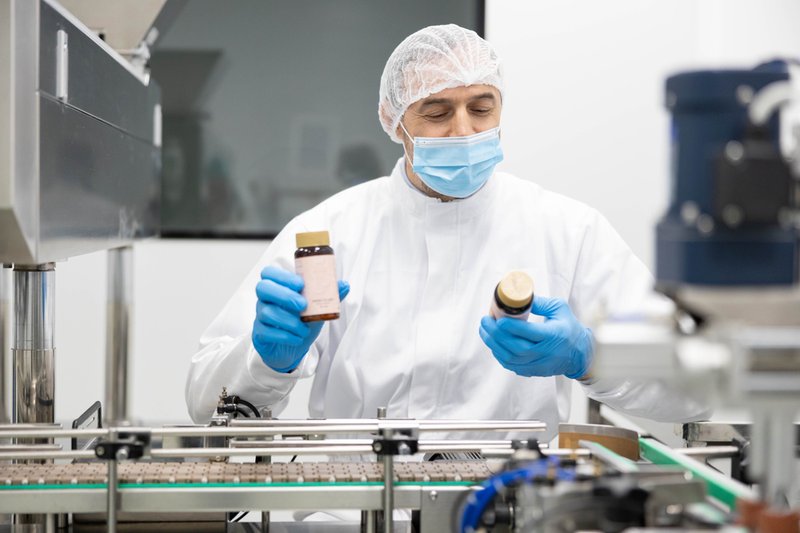
Stability testing that confirms a product meets its label claims through its full intended shelf life is particularly important for brands making potency or efficacy claims. A product that meets its specifications at the time of manufacture but degrades meaningfully before its expiration date has claims that are accurate at the start and misleading at the end. Verifying stability before launch closes that gap before it reaches a consumer.
The Retail and Consumer Cost of Underdelivering
Underdelivering on a supplement product launch has costs that extend beyond the immediate sales cycle. A retail buyer who receives a late shipment, an incomplete order, or a product that generates consumer complaints has a concrete data point that shapes how it evaluates that brand in every subsequent ranging conversation. That data point does not expire quickly.
Consumer trust in the supplement category is earned incrementally and lost rapidly. A product that generated strong initial interest and then underperformed against its claims trains consumers to discount that brand's future launch announcements. Rebuilding from that position requires sustained performance over multiple product cycles, not a single corrective action.
The brands that avoid this pattern share a common discipline: they manage the gap between ambition and readiness before it becomes visible to the market, not after. Their launch announcements reflect confirmed operational realities, their claims reflect verified product performance, and their timelines reflect actual production schedules. That alignment is not a constraint on ambition. It is what makes ambition credible.
Launch Readiness Starts With the Right Supplement Product Manufacturer
At Bactolac Pharmaceutical, we work with brands to build production timelines that reflect manufacturing reality, not optimistic projections. In-house R&D teams support formula development and stability verification before products go to market. Our quality systems across powders, capsules, and tablets ensure that finished goods meet their specifications before they leave our facility. Our turnkey packaging services cover bottles, tubs, sachets, stick packs, and gusset bags, and we ship finished goods to any domestic distribution center a brand uses
Call us at 1-833-215-2935 or fill out a contact form to connect with our team.