

Growth creates opportunity, but it also creates operational pressure. As order sizes increase, brands need products to perform exactly the same at larger scale as they did in earlier batches. That is why high-volume production requires disciplined systems, not simply bigger equipment.
Many products perform well in smaller runs and encounter issues only after scale increases. Variations in blending, filling accuracy, packaging flow, or material handling can become more visible at higher output levels. Manufacturers that plan for scale are better positioned to protect quality while meeting demand.
Why High Volume Production Changes the Challenge
Scaling output introduces more moving parts. Longer run times, larger ingredient quantities, additional packaging materials, and tighter scheduling windows all affect high-volume production performance.
Small inefficiencies that seem minor in limited runs can become expensive when multiplied across thousands of units. A slight fill variance, slower line speed, or delayed material release can impact margins and timelines quickly.
This is why growth requires more than added capacity. It requires stronger process control from receiving through finished goods.
Standardized Procedures Support High Volume Production
Consistency begins with repeatable methods. Manufacturers that succeed in high-volume production rely on documented procedures for weighing, blending, line setup, sanitation, packaging changeovers, and batch release.
Standardization helps reduce variation between shifts, operators, and production dates. It also improves training because teams work from the same expectations each time a product is run.
When procedures are clear and followed closely, output becomes more predictable. Predictability is one of the most valuable assets at scale. FDA regulations require written procedures for all stages of dietary supplement manufacturing to ensure uniformity and consistency across batches.

Raw Material Control During High Volume Production
Larger runs depend on larger quantities of ingredients and packaging components. That makes incoming material quality especially important in high-volume production environments.
Manufacturers need systems for lot verification, organized storage, accurate staging, and controlled dispensing. If the wrong material is staged or a quality issue is discovered late, delays can affect an entire production schedule. Strong raw material control reduces these risks. It also supports traceability if questions arise later.
Equipment Readiness for High Volume Production
Machines that perform inconsistently can disrupt even well-planned schedules. Reliable high-volume production depends on equipment that is calibrated, maintained, and matched to the product format being produced.
Fillers, blenders, tablet presses, encapsulation lines, and packaging equipment all require preventive maintenance and performance checks. Wear parts, sensors, and seals should be reviewed before issues cause downtime.
Equipment readiness protects both throughput and quality. It also helps manufacturers avoid rushed fixes during active runs.
Process Monitoring Across Long Production Runs
Longer runs create more opportunities for drift over time. Temperatures can change, material flow can vary, and packaging alignment may shift. Effective high-volume production includes ongoing monitoring rather than one-time setup checks.
Operators may review fill weights, seal integrity, blend uniformity, label placement, and line efficiency at scheduled intervals. These checkpoints help identify small deviations before they become larger problems. Continuous monitoring is especially valuable when producing premium products where consistency expectations are high.
Process control literature referenced by the National Institutes of Health emphasizes that continuous monitoring is essential to detect process drift and maintain product uniformity in large-scale production environments.
Workforce Coordination Matters at Scale
People remain central to manufacturing performance. Even advanced automation depends on trained teams who can operate lines, verify standards, and respond quickly when needed. Strong high-volume production requires clear coordination across departments.
Production, quality, maintenance, warehousing, and planning teams all influence outcomes. If one function falls out of sync, delays can spread across the operation.
Manufacturers that invest in communication, training, and accountability often perform better during peak demand periods.
Scheduling Strategy in High Volume Production
Capacity is limited by more than machine speed. Scheduling determines how effectively time, labor, materials, and line availability are used. Smart high-volume production planning balances urgent demand with realistic throughput.
Grouping similar products can reduce changeover time. Sequencing runs around allergen controls, packaging formats, or shared components can also improve efficiency.
Poor scheduling often leads to rushed transitions, overtime pressure, and preventable errors. Strong planning creates steadier performance.
Packaging Consistency in High Volume Production
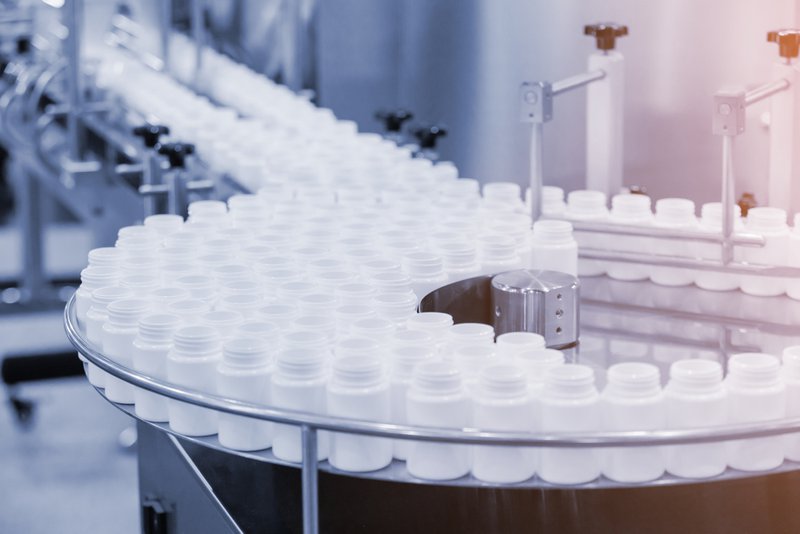
Finished product quality includes what customers see first. Damaged labels, loose caps, leaking pouches, or poor seals can undermine confidence even if the formula itself is excellent. Packaging control is a key part of high-volume production success.
Manufacturers should monitor torque settings, seal strength, print clarity, date coding, and overall presentation throughout the run. Packaging materials should also be stored and handled properly to prevent defects. At scale, appearance matters because small packaging issues can affect thousands of units quickly.
Data Improves High Volume Production Performance
The best operations learn from every run. Data gathered during high-volume production can reveal recurring bottlenecks, waste patterns, downtime causes, and quality trends.
Useful metrics may include yield rates, line speed, changeover time, reject percentages, and schedule attainment. Reviewing these measures helps manufacturers improve future runs rather than repeating avoidable problems. Continuous improvement often creates major gains through small adjustments applied consistently.
Partner Selection for Growing Brands
As brands expand, manufacturing expectations change. A partner that handled smaller runs successfully may not be equipped for reliable high-volume production without stronger systems and broader capabilities.
Brands should evaluate facility capacity, packaging flexibility, quality controls, sourcing depth, and communication practices. Growth requires a manufacturer that can scale without sacrificing reliability.
Changing partners during rapid expansion can be disruptive. Planning ahead can reduce that risk significantly.
Long-Term Consistency Builds Brand Trust
Customers rarely think about production systems directly, but they notice the results. Products that look, taste, and perform the same every time strengthen confidence. Reliable high-volume production helps preserve that trust during periods of rapid growth.
Consistency also supports retail relationships and distributor confidence. Partners prefer brands that can meet demand without creating operational surprises. As volume grows, dependable execution becomes a competitive advantage.
Scaling Output Requires Stronger Systems
Growing demand is valuable only when operations can support it. High volume production requires disciplined procedures, reliable equipment, trained teams, active monitoring, and strong planning across the entire manufacturing process.
At Bactolac Pharmaceuticals, we help brands scale through integrated manufacturing, in-house quality controls, flexible packaging capabilities, and operational systems built to maintain consistency as volumes increase. Our team focuses on helping brands grow without compromising the customer experience. Contact us today or call 1-833-215-2935 to connect with our team.