

Launching a supplement product requires coordinating multiple functions. Formulation, testing, production, packaging, and labeling must each be completed in sequence before a product is ready to ship. Building those capabilities internally takes time, capital, and operational expertise most brands don't have at launch. Working with experienced contract manufacturers removes the infrastructure barrier and replaces it with access to systems that already work. The result is not automatically a faster launch. It removes the structural delays that internal builds create.
The Cost of Building Manufacturing Infrastructure Internally
Brands that attempt to build manufacturing capability from the ground up face a significant startup burden before any product reaches production. Acquiring equipment, validating processes, hiring qualified personnel, establishing supplier relationships, and building quality documentation systems all require time that runs parallel to product development rather than supporting it.
Even brands with sufficient capital to build internal capability typically underestimate the validation timeline. Equipment must be qualified. Cleaning processes must be validated. Quality systems must be documented, trained against, and audited before they can support commercial production. That process takes months under ideal conditions, and longer when you factor in regulatory preparation.
Contracting with an established manufacturer replaces that build timeline with access to existing infrastructure. The equipment runs. The processes are validated. The quality systems are certified. A brand entering that environment focuses on its product rather than its production setup.
What Established Contract Manufacturers Provide From Day One
An established contract manufacturer brings several capabilities that a brand building internally would spend considerable time developing:
- Production equipment across multiple dose forms, already validated and in active commercial use
- Qualified supplier relationships for raw materials, reducing procurement lead times for commonly used ingredients
- Documented quality systems that meet cGMP requirements and have been independently audited
- Experienced production personnel who understand how formulas behave under real manufacturing conditions
- Regulatory familiarity with labeling requirements, batch documentation standards, and finished product release criteria

Each capability represents months of development time that a brand can access immediately, rather than building from scratch. The efficiency gain is structural, not incremental.
Integrated R&D and Manufacturing Reduces Handoffs
One of the most consequential sources of delay in supplement product development is the handoff between formulation and manufacturing. When a brand develops a formula with one team and then transfers it to a separate manufacturer for production, information gets lost in translation. Ingredient specifications, processing parameters, and sensory benchmarks all require re-communication, creating misalignment and adding weeks to the timeline.
Contract manufacturers with in-house R&D capability eliminate that handoff. The same team that develops a formula understands how it will behave during production. Formulation decisions account for equipment constraints from the beginning. Adjustments identified during prototype development feed directly into production planning without requiring a separate briefing process.
That integration does not guarantee a faster development timeline in every case. Complex formulas still require iteration. Novel ingredient combinations still need validation. What it does guarantee is that development and production teams share context, reducing the re-communication cycles separate organizations require.
In-House Testing Reduces Delays Between Key Stages
Testing is one of the most time-sensitive functions in supplement production. Incoming raw materials require identity and purity verification before production begins. In-process checks occur during blending and filling. Finished product testing must be completed before quality release authorizes shipment. Each testing event sits on the critical path of the production timeline.
When a manufacturer sends samples to an external laboratory for testing, the timeline depends on the laboratory's schedule, not the urgency of the production run. A finished product batch that completes production on a Thursday may not receive external laboratory results until the following week, pushing shipment dates regardless of how well the production run went.
In-house testing capability keeps those decisions internal. Results return faster because the laboratory and the production floor share the same operational environment. Quality release timelines become more predictable because they don't depend on a third party's schedule. For brands managing launch dates and retail commitments, that predictability has direct commercial value.
Packaging and Labeling Integration as an Efficiency Factor
Brands that manage production and packaging through separate vendors create a handoff that adds coordination complexity and can delay timelines. Finished product must be transferred between facilities. They must communicate specifications across organizational boundaries. A production run can finish on schedule but still miss a launch date if packaging lead times aren't coordinated.
Contract manufacturers that offer integrated packaging and labeling services keep the finished goods timeline under a single operational roof. Tubs, bottles, stick packs, gusset bags, and single-serve pouches can all be filled and labeled in the same facility where production occurred. That integration eliminates inter-vendor transit time, reduces specification translation errors, and keeps quality accountability unified through to the finished, shelf-ready product.
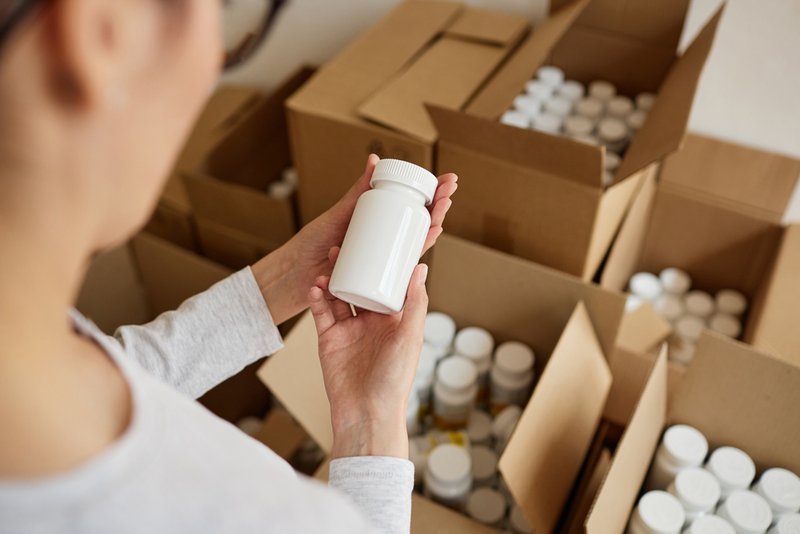
The efficiency gain is not dramatic in isolation. Across a full launch timeline that includes multiple coordination points, however, removing each unnecessary handoff compounds into a meaningful reduction in elapsed time between production completion and product availability.
From Prototype to Commercial Production
The transition from prototype to commercial production is a point where many supplement launches lose time. A formula developed at small scale must be validated at commercial batch size. Processing parameters may need adjustment. Confirm fill-weight targets against commercial equipment performance. Packaging integration must be sequenced against the production run.
Established contract manufacturers have managed that transition many times. Their teams recognize the scale-up variables that affect different formula types. They build validation steps into the production planning process rather than discovering them after a commercial run is scheduled. That institutional knowledge compresses the prototype-to-production timeline without bypassing the validation work that consistent quality requires.
Brands working with a manufacturer for the first time on a given formula still need to allow time for that validation. They avoid the extra time needed to educate a manufacturing partner on scale-up considerations they haven't yet encountered.
Time-to-Market Depends on How Well the Stages Connect
At Bactolac Pharmaceutical, our integrated model connects R&D, production, in-house testing, and packaging under one operational roof, reducing the handoffs that slow launches down and keeping quality release timelines internal and predictable. We ship finished goods to any domestic distribution center, including Amazon fulfillment centers, and facilitate international shipping for brands with global distribution needs.
Call us at 1-833-215-2935 or fill out a contact form to connect with our team.